February 12, 2026

When shopping for insurance, people often hear the terms “insurance agent” and “insurance broker” used interchangeably. And at first, you may think of them as the same thing. Both help you obtain insurance, explain policies, and guide you through coverage options. However, there are key differences between the two. So, what makes them special, really, and why is that important to you?
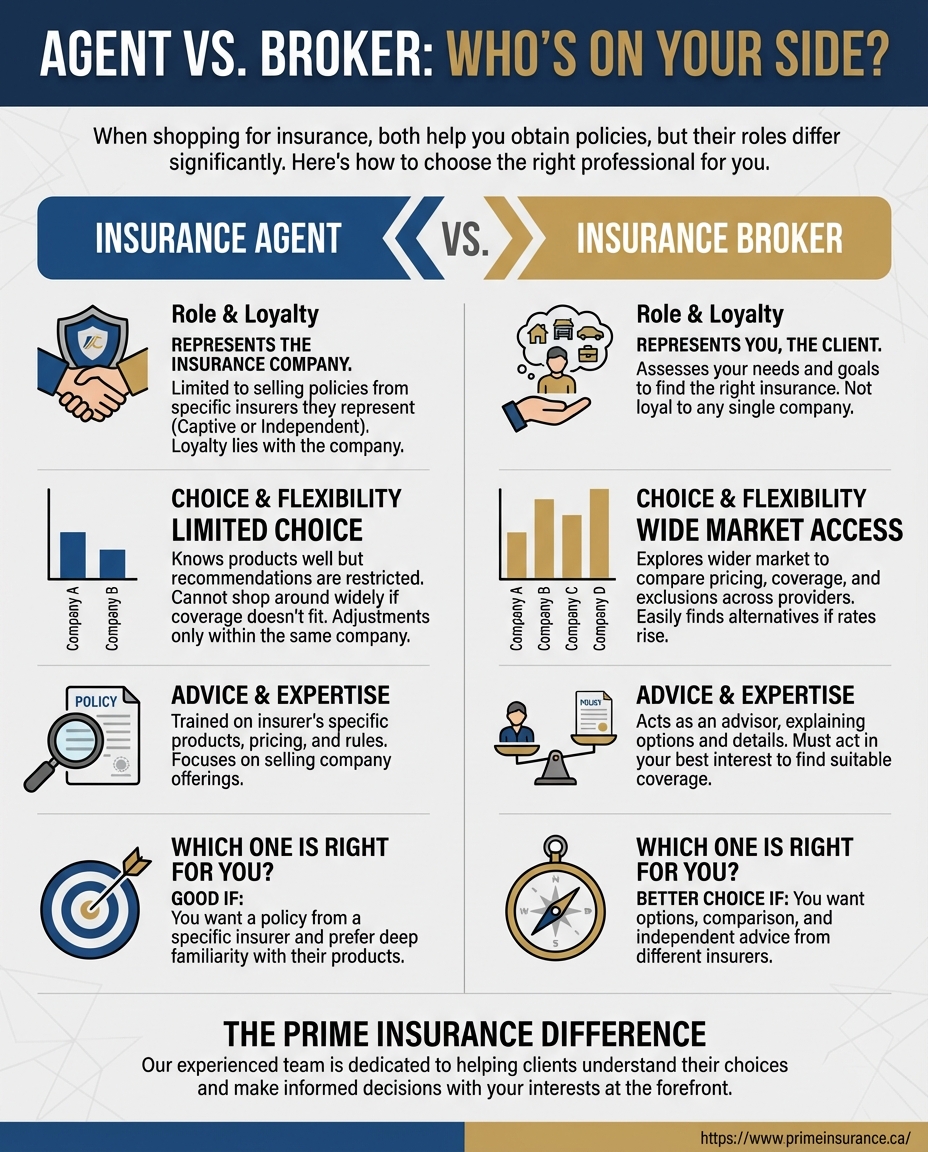
An insurance agent serves a small group of insurance companies or a single company. Their job is to sell and serve policies from these companies. Agents can be of two kinds. Captive agents represent only one insurer. Independent agents may represent a few insurers but still have defined partnerships.
Because agents work closely with certain companies, they know those products very well. They are trained on the insurer’s coverage options, pricing structure, and underwriting rules. However, an agent’s recommendations are limited to what their company offers. If a policy does not quite fit your needs, they cannot shop around beyond their approved list.
An insurance broker represents you, not the insurance company. They will assess your goals and needs to find the right insurance for you by exploring the wider insurance market with multiple insurance providers. Brokers are not loyal to any particular company and have more flexibility.
This wider access allows brokers to compare pricing, coverage limits, exclusions, and added benefits across different companies. Brokers also act as advisors, helping you understand the details of each option, and which works best for your lifestyle and real-life scenarios.
One of the major differences between an agent and a broker is the element of choice. Agents are knowledgeable about the products they sell, although the choice is limited. Brokers can explore the market more broadly.
This flexibility matters when prices change or when your needs evolve. If your insurer raises rates at renewal, a broker can easily look for alternatives. An agent may only be able to offer adjustments within the same company. For people who value comparison and customization, this difference alone can be significant.
An insurance agent’s loyalty is primarily to the insurance company they represent. It does not mean they do not care about clients; however, their interest lies in selling the insurance company’s products.
A broker’s loyalty lies with the client. A broker’s job is to advise you on coverage that most suits your needs and budget. A broker must act in your best interest, which often makes people feel more comfortable shopping for coverage.
There is no universal answer. If you want a policy from a specific insurer and prefer working with someone deeply familiar with that company’s products, an agent may be a good fit. If you would like to have a choice, compare options, and receive advice from different insurers, then a broker would be the better choice for you. This is especially true if you want a better understanding of the coverage with the assurance that you are not overpaying or underinsured. Asking the right questions and understanding the differences can save time, money, and frustration in the long run.
At Prime Insurance, our experienced team is dedicated to helping clients understand their choices and make informed decisions, while providing information and guidance to keep their interests at the forefront.

Protecting our homes, our businesses, our health, and our property are some of the main concerns that play on hard-working people’s minds from day to day.That’s why having insurance is essential in so many aspects of our lives. Keeping expenses...




Get in Touch With Us
We’re open daily to help you find the right coverage or make updates to your current policy.